Want to know how fast you can click a mouse button? The Kohi Clicking Test gives you a quick way to find out. It counts your clicks over a set time and shows your clicks-per-second (CPS) score. You can use the result to understand how fast you click.
This test can be useful for gamers who play games that need quick mouse clicks. Your result may change with your mouse, clicking method, and test attempt. Learning how the test works can help you understand your score and deal with common problems.
What Is The Kohi Clicking Test?
The Kohi Clicking Test is an online tool that counts how many times you click your mouse within a chosen time limit. When the test ends, it displays your total clicks and clicks per second (CPS). You can use these results to see how quickly you click during a single attempt.
The test became popular among Minecraft players because quick mouse clicks can help during player-versus-player (PvP) fights. Other users take the test to check their clicking speed online. The CPS score shows how many clicks you make per second, but it does not show how good you are at a game.
How To Use The Kohi Click Test Online
Using this test is simple. Open the test in your browser and choose a time limit if different options are available. Place your cursor inside the test area and start clicking when you are ready.
Keep clicking until the timer ends. The test will show your total clicks and clicks per second (CPS). You can repeat the test to compare your results. Use the same time limit for each attempt to make the comparison fair.
Benefits of This Test For Gamers
The Kohi Click Test helps gamers check how quickly they can click a mouse button. It can be useful for players who want to know their CPS score and see how their clicking speed changes across different attempts.
Here are some key benefits:
Check Clicking Speed: The test shows how many clicks you make per second. This helps you understand your clicking speed during a set time.
Compare Test Results: You can take the test more than once and compare your scores. This helps you see whether your results change between attempts.
Try Different Clicking Methods: You can test regular clicking, jitter clicking, butterfly clicking, and drag clicking. The results may differ depending on your mouse and the method you use.
Check Mouse Response: The test can help you notice if some clicks are not counted. If your result seems lower than expected, you can check whether your mouse button works properly.
Prepare for Minecraft PvP: Quick clicks can be useful during fights against other players in Minecraft. Knowing your CPS score can help you understand your clicking speed, but it does not guarantee better results in a fight.
A high CPS score is only one part of gaming. Aim, timing, movement, and game knowledge also affect how you play.
What Is a Good CPS Score for Gaming?
A good CPS score depends on the game you play and the way you click. With regular clicking, many players get around 5–7 clicks per second. Some may reach higher scores with other methods, but results can vary from person to person.
In Minecraft PvP, a higher CPS may help you click more often during a fight. However, clicking speed alone does not decide who wins. Aim, movement, timing, and game rules also affect the result.
Here is a simple guide to common CPS ranges:
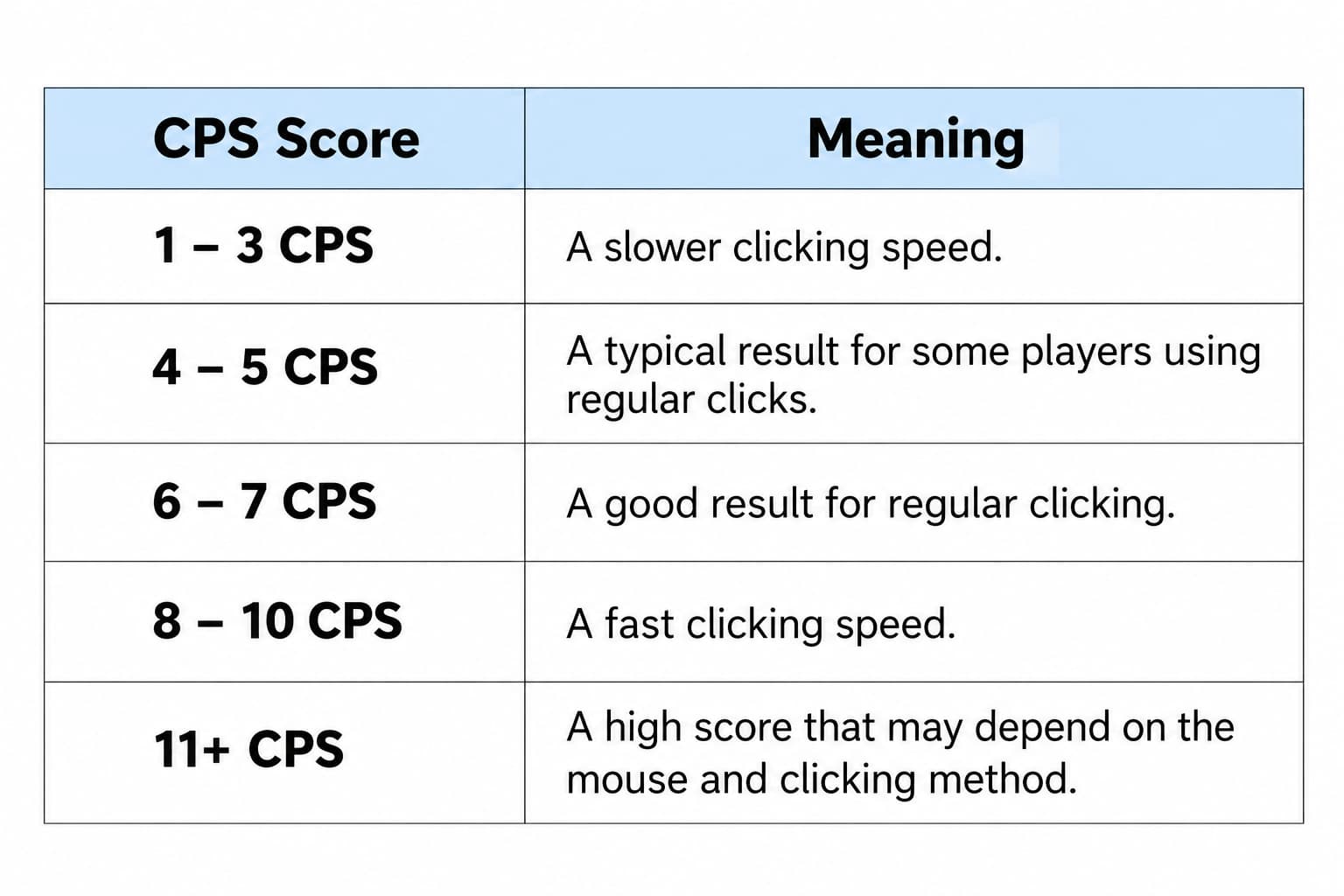
These ranges are only general examples, not official ratings. Your score can change with the test duration, mouse, and clicking method.
Different Types of Clicking Methods
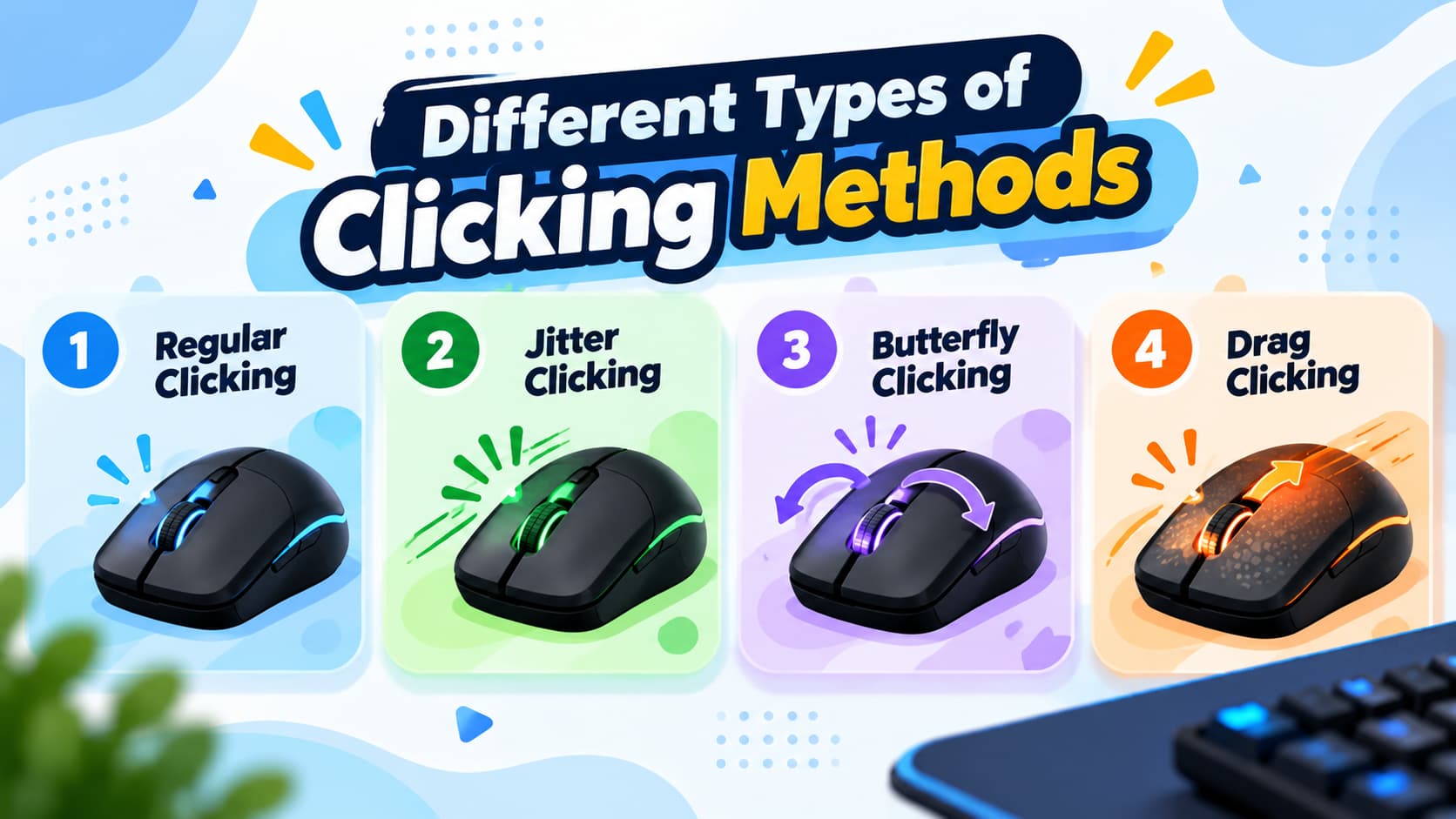
Players use different clicking methods based on the game they play, their mouse, and how they move their fingers. Some methods use one finger, while others use different movements to register more clicks in less time. Each method works differently and may give different results.
Regular Clicking
Regular clicking means pressing and releasing the mouse button with one finger. It is easy to learn and works well for everyday computer use and many games. Your clicking speed depends on how quickly you can press and release the button.
Jitter Clicking
Jitter clicking uses quick muscle movements in the hand and arm to press the mouse button fast. Some players use this method to get more clicks per second in games. Repeated movements can cause discomfort, so take breaks and follow proper mouse ergonomics to help keep your hand and wrist comfortable.
Butterfly Clicking
Butterfly clicking uses two fingers to take turns pressing the same mouse button. This may help some players make more clicks in less time than regular clicking. Results depend on the mouse, finger movement, and whether the mouse registers each click.
Drag Clicking
Drag clicking involves sliding a finger across the mouse button so that friction may register several clicks. This method depends on the mouse's surface and button design, so it does not work equally well on every mouse. Some games or servers may also restrict this method.
Common Problems During These Tests
Sometimes, the clicking test may not count every click or respond as expected. This can happen because of a mouse issue, a browser problem, or the way the test page works. Knowing the common problems can help you find the cause and decide what to check before trying again.
Mouse Clicks Not Registering
If some clicks do not appear in your results, your mouse button may not be registering every press. Try clicking in another application to see if the same issue occurs.
Also, check whether the mouse is connected properly and whether the button works as expected. If the problem continues in other applications, the mouse may need repair or replacement.
Clicking Test Not Responding
If the test does not start or respond to your clicks, first check whether the page has finished loading. Refresh the page and try again. You can also close extra browser tabs or open the test in another browser.
If the test still does not respond, check your internet connection and make sure you are following the instructions shown on the page.
CPS Results Changing Between Attempts
Your CPS result may change each time you take the test. You might click faster in one attempt than another, or your fingers may become tired after repeated testing.
Some clicks may also go uncounted if the mouse button does not register them. To compare your results, use the same test duration and clicking method each time, and take a short break if your hand feels tired.
Conclusion
The Kohi Click Test gives you a simple way to check your clicking speed and CPS score. It can be useful for gamers who want to understand how quickly they click and how different clicking methods affect their results.
Regular clicking, jitter clicking, butterfly clicking, and drag clicking each work in different ways. If the test does not respond correctly, check your mouse and browser before trying again.